 English
 Türkçe
  Ελληνικά
  العربية
  Русский
  עברית
עברית  Deutsch
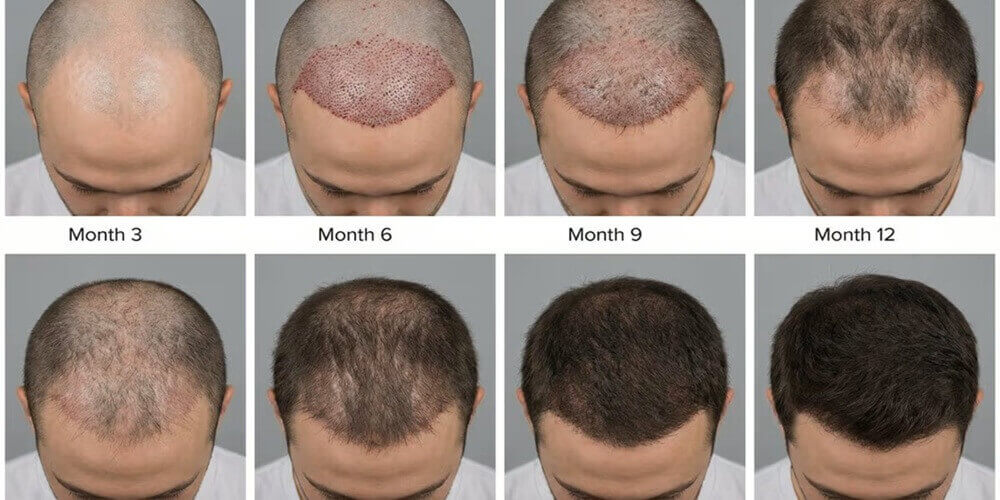
You finally did it. You booked the procedure. You sat through the surgery. Now you want to know: what to expect after hair transplant in the long run? This guide walks you through every single month. We cover the good, the bad, and everything between. By the end, you will know exactly how your scalp changes from day one to day 365.
Many patients fixate on the surgery itself. They forget the real work starts after you leave the clinic. The hair transplant recovery timeline spans twelve full months. Some months bring joy. Others bring panic. You need to know the difference between normal shedding and real problems. Let us break down the hair transplant growth stages so you never worry unnecessarily.
The first thirty days test your patience. Your scalp looks red. Tiny scabs form around each graft. You cannot touch, scratch, or wash aggressively. Doctors call this the critical healing phase. Your body works overtime to secure those new follicles.
You will notice swelling around the forehead. This peaks around day three or four. Sleep with your head elevated. It helps drain fluid faster. By day seven, most patients return to light work. The redness fades by week two or three.
Here is what you must avoid: direct sunlight, heavy sweating, and smoking. These three things kill grafts fast. Stick to gentle shampooing. Pat dry—never rub. Your clinic will give you a spray bottle with saline solution. Use it religiously.
Most people feel anxious this month. The scalp looks worse before it looks better. Trust the process. Those tiny hairs are settling in for the long haul.
Around week two or three, something scary happens. Your new hair falls out. Your native hairs near the transplant area might thin too.
Doctors call this shock loss after hair transplant. It terrifies patients. It should not.
Shock loss after hair transplant occurs because your scalp experiences trauma. The surgery disrupts blood flow temporarily. Hairs in the growth phase get pushed into the resting phase. They shed. This is normal. This is temporary.
Two types exist. The first type affects transplanted grafts. The hairs break off at the shaft, but the follicle stays alive underground. The second type affects native hairs nearby. These were weak already. The surgery stress pushes them out early.
How long does shock loss after hair transplant last? Usually two to eight weeks. Some unlucky patients see it extend to month four. The key distinction: shock loss looks diffuse and patchy. True graft failure looks like empty, smooth patches where no hair ever grows back.
Do not panic if you see shedding. Do panic if you see pimples, pus, or bright red inflammation. Those signal infection. Call your doctor immediately for those. Normal shock loss after hair transplant requires only patience.
Months two and three represent the "ugly duckling" phase. Your transplanted hairs have shed. Your native hairs might have thinned from shock. You look balder than when you started. This is the hardest psychological period.
You will question your decision. You will google "failed hair transplant" at 2 AM. Stop. This is standard. The follicles sit dormant beneath your scalp right now. They are not dead. They are preparing.
Your scalp might feel numb still. Small nerves take months to regenerate. You might get occasional tingling or itching. These are good signs. They mean healing continues.
Stay away from mirrors. Take monthly photos instead of daily checks. The difference between day 60 and day 90 is invisible to the naked eye. But the follicles are building new hair shafts underground. You just cannot see the work yet.
Month four brings the first rewards. Tiny, thin hairs poke through. They look like baby fuzz. They might grow in different directions. Some look kinky or wiry. Do not judge them yet.
These first hairs lack pigment often. They look white or transparent. They lack thickness. This frustrates patients who expected instant density. Remember: these are version 1.0 hairs. Better versions come later.
The hair transplant growth stages follow a predictable pattern. First comes the anagen phase where new hairs form. Then they push through the scalp. Then they thicken and darken over subsequent cycles. Each follicle might restart this cycle two or three times before reaching final quality.
By month five, you might have 30% of your final density visible. It looks patchy. Some areas grow faster than others. This is normal. Hair does not grow in perfect synchronization.
Halfway through your hair transplant results after 12 months journey, momentum builds. Hairs thicken noticeably. The patchy look starts blending. You can style your hair without obvious bald spots showing.
Density reaches 50-60% typically. The hairs gain color and strength. You can finally cut and style them. Some patients start using light styling products now. Avoid heavy gels or waxes that pull on roots.
This is when you might notice true hair transplant before and after 1 year differences in photos. Compare month six to month two. The change shocks most patients. You finally see the investment paying off.
Your confidence returns. You stop wearing hats daily. You look people in the eye again. The psychological weight of hair loss lifts gradually. Enjoy this phase. It gets even better.
The hair transplant final results timeline enters its polish phase here. Hairs continue thickening. The texture improves. Early kinky or wiry hairs soften and straighten.
Density climbs to 70-80%. The hairline looks natural, not pluggy. Native hairs that experienced shock loss after hair transplant have regrown fully now. The blend between transplanted and native hair becomes seamless.
You might notice some hairs grow faster than others. This creates a layered look. Regular trims help even things out. Some patients start using minoxidil now if doctors approve it. This boosts native hair and supports the new grafts.
Scalp sensation returns to 90% normal. Any remaining numbness fades by month nine. The donor area on your head or beard heals completely. Scars mature and fade to thin white lines. Short haircuts become possible again.
By month ten, you see 85-90% of your hair transplant results after 12 months. The growth slows down now. Changes become subtle rather than dramatic.
Hairs reach near-final thickness. The density looks solid from all angles. You can use any hairstyle you want. The "transplanted" look disappears completely. Even hair professionals cannot tell you had surgery.
Some patients see minor improvements continue through month eleven. Others plateau here. Both scenarios are normal. The follicles have completed their main growth cycles. What you see now is essentially your final outcome.
Take professional photos. Compare them to your pre-surgery shots. The hair transplant before and after 1 year transformation stuns most patients. You forget how bald you looked. The new hair feels like it was always there.
You made it. Twelve full months. The one year after hair transplant milestone means your journey completes. The hair transplant final results timeline ends here.
Your hair reaches maximum thickness and density. The texture matches your native hair perfectly. The hairline frames your face naturally. You style, cut, color, and treat this hair exactly like the rest.
The hair transplant growth stages finish cycling. Each follicle has settled into its permanent rhythm. Some hairs grow faster, some slower—that is just biology. But the overall result looks consistent and mature.
Scars in the donor area fade to nearly invisible. Unless someone inspects your scalp with a magnifying glass, they see nothing unusual. You can wear your hair as short as you want in the back and sides.
Most importantly, the psychological transformation completes too. You no longer think about your hair every hour. You just live. That freedom is the real gift of the one year after hair transplant mark.
Reaching one year after hair transplant does not mean ignoring your hair forever. You must protect your investment. Native hairs remain vulnerable to balding. Transplanted hairs resist DHT better but need care too.
Continue any medications your doctor prescribed. Finasteride or minoxidil help preserve native hair. Stopping them risks further loss around your transplanted zone. That creates a weird "island" look you want to avoid.
Eat protein-rich foods. Hair needs amino acids to stay strong. Manage stress. Cortisol triggers shedding in everyone, transplanted or not. Sleep eight hours. Your body repairs hair follicles overnight.
Schedule annual checkups with your surgeon. They track long-term density and catch problems early. Some patients opt for small touch-up procedures years later. This fills in any minor gaps or adds density if desired.
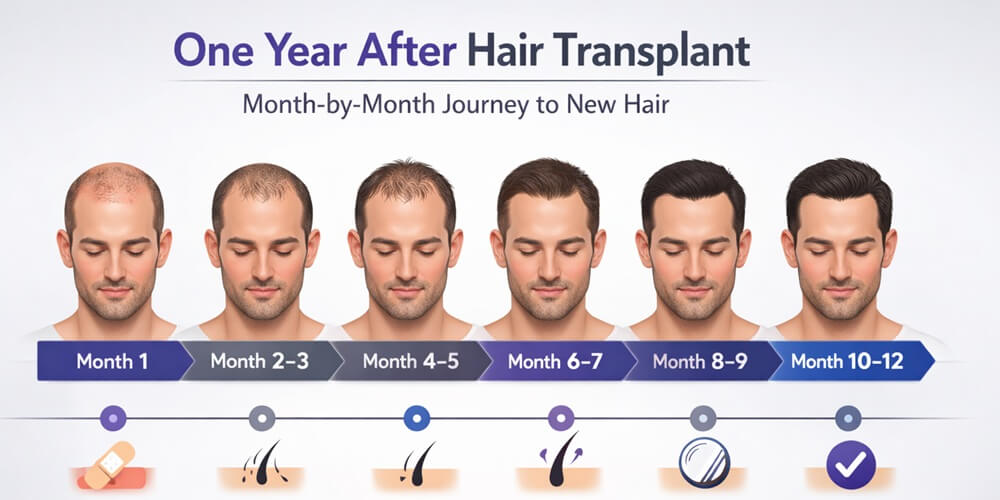
Even after one year after hair transplant, problems can arise. Know the difference between normal variation and real trouble.
See your doctor if you notice: sudden patchy bald spots, scalp pain or burning, excessive dandruff or flaking that never stops, or hairs breaking off at the scalp line. These suggest underlying issues like alopecia areata or scalp infections.
Normal signs include: seasonal shedding (everyone loses 50-100 hairs daily), slightly slower growth in winter, or one side growing faster than the other (asymmetry is natural). Do not panic over these.
Remember the hair transplant shedding phase you survived in month two? Your scalp remembers that trauma. It might overreact to future stress. Stay gentle with styling. Avoid tight ponytails or braids that pull on roots.
Your hair transplant recovery timeline varies slightly based on method. FUE (follicular unit extraction) leaves tiny dot scars. FUT (follicular unit transplantation) leaves one linear scar. Both produce excellent hair transplant results after 12 months if done well.
FUE patients heal faster in the donor area. They shave their heads sooner. FUT patients get more grafts in one session, typically. The strip removal allows higher-density transplants.
DHI (direct hair implantation) uses special pens to implant grafts. It reduces shock loss after hair transplant in some studies. The precision helps angle control. But it costs more and takes longer.
Robotic assistance improves accuracy. Artas systems map your scalp digitally. They select the best donor hairs. The hair transplant growth stages proceed identically regardless of technique. The tool matters less than the surgeon's skill.
Reading clinical descriptions helps. Hearing real voices helps more. Patients describe month three as "the dark night of the soul." They describe month six as "finally seeing the light." By one year after hair transplant, most call it "the best money I ever spent."
One patient told his story online. He panicked at month four when growth looked uneven. His right temple filled in faster than his left. By month eight, both sides matched perfectly. Asymmetry early on means nothing.
Another patient worried about shock loss after hair transplant destroying her native hair. She had thin edges before surgery. The shock loss made them disappear completely for ten weeks. By month six, her edges returned thicker than ever. The trauma actually stimulated renewal.
A third patient documented his hair transplant before and after 1 year with monthly photos. The slideshow went viral. Viewers could not believe month two and month twelve were the same person. The transformation shocked even him.
Your hair transplant final results timeline depends heavily on who holds the tools. Research extensively. Look at hundreds of hair transplant before and after 1 year photos from each clinic. Ignore marketing. Focus on real patient results.
Ask specific questions. How many grafts survive long-term? What is their shock loss after hair transplant rate? Do they offer touch-up guarantees? How do they handle the hair transplant shedding phase complications?
Avoid clinics promising instant density. Hair growth takes time. Anyone guaranteeing full results in three months lies. The hair transplant growth stages cannot be rushed. Biology sets the schedule.
Check credentials. Membership in ISHRS (International Society of Hair Restoration Surgery) indicates standards. Read reviews from patients at the one year after hair transplant mark specifically. Early reviews mean nothing. Long-term results tell the truth.
Your behavior affects the hair transplant recovery timeline. Smokers heal slower. Nicotine constricts blood vessels. Those vessels feed your new grafts. Quit at least one month before and three months after surgery.
Drink water constantly. Hydration keeps scalp skin flexible and healthy. Dehydrated scalps itch and flake. That distracts you and slows healing.
Exercise carefully. Heavy lifting increases blood pressure. That risks bleeding in early weeks. Walking is fine. Marathon training waits until month two or three.
Sleep on your back. Side sleeping rubs grafts against pillows. Stomach sleeping presses your face into the mattress. Buy a travel pillow if needed. Protect those grafts while you dream.
Hair transplants cost thousands. The one year after hair transplant milestone proves the value. Calculate cost per day over your lifetime. A $10,000 transplant lasting thirty years costs less than a dollar daily.
Compare to ongoing hair loss treatments. Minoxidil and finasteride cost monthly forever. Hair systems need replacement every few months. The transplant pays for itself eventually.
More importantly, calculate confidence value. How much is feeling good in photos worth? What price tag do you put on never worrying about wind or rain exposing your bald spot? The hair transplant results after 12 months deliver psychological returns no spreadsheet captures.
Financing options exist. Many clinics offer payment plans. Do not choose the cheapest option. Choose the best value. A bad transplant costs more to fix than a good one costs initially.
If you are reading this before your surgery, good. You now know what to expect after hair transplant in complete detail. Use this knowledge to stay calm during hard months.
Trust your hair transplant recovery timeline. Do not compare your month four to someone else's month six. Everyone grows at different speeds. Genetics, age, and health all play roles.
Document everything. Photos, notes, feelings. You will forget the bad parts later. You will want to help others by sharing your real hair transplant before and after 1 year journey.
Finally, remember: the hair transplant shedding phase and shock loss after hair transplant are temporary. The new hair is permanent. Twelve months of patience buys decades of confidence. That trade works in your favor every single time.
Absolutely. The one year after hair transplant, the path challenges you. It tests your patience. It rewards your trust. From the first scary shock loss after hair transplant to the final proud look in the mirror, every stage serves a purpose.
You now understand the hair transplant growth stages completely. You know the hair transplant final results timeline by heart. You are prepared for the hair transplant shedding phase. You expect the hair transplant recovery timeline bumps.
Most importantly, you know what hair transplant results after 12 months really mean. They mean freedom. They mean looking like yourself again. They mean never thinking about hats or angles or lighting.
Book your consultation. Start your journey. Twelve months from now, you will write your own success story. The hair transplant before and after 1 year transformation awaits. Take the first step today.